
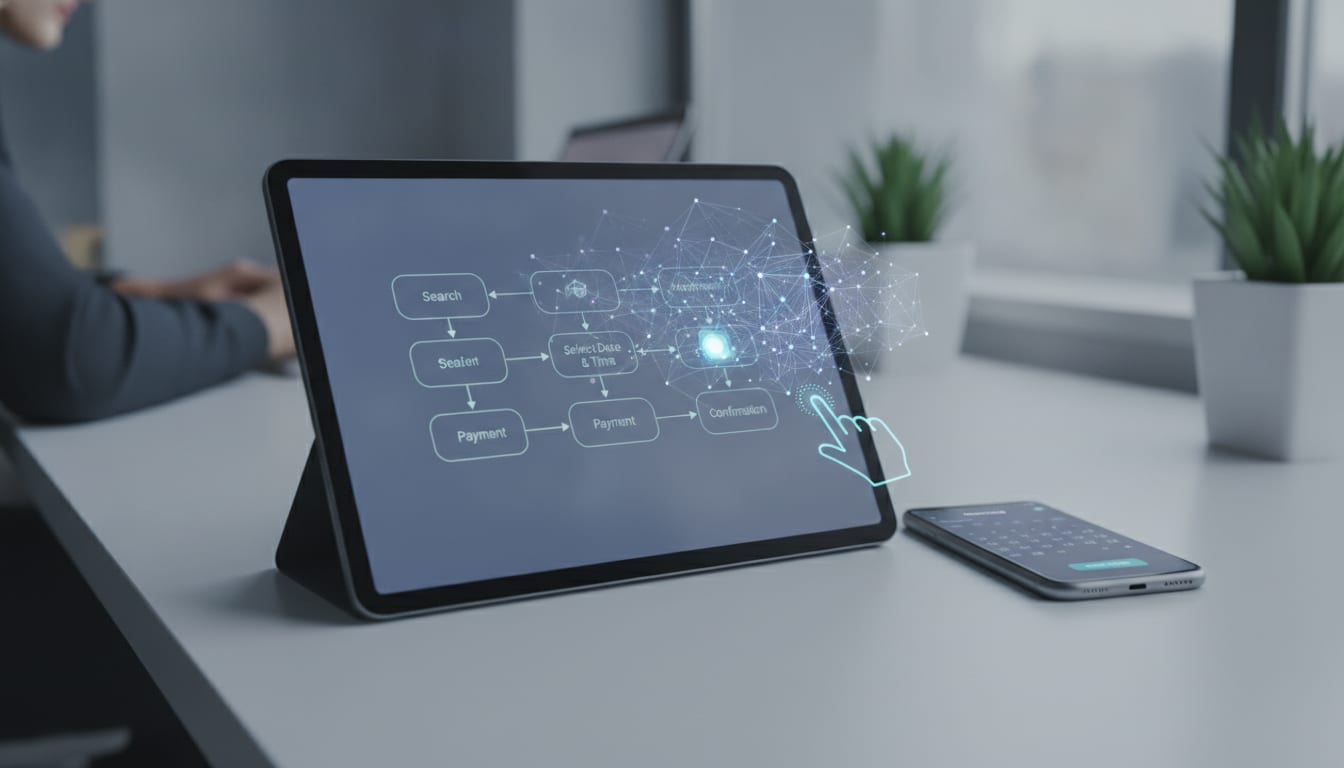
Streamlining Booking App User Flows with AI Design
What is the optimal approach to designing user flows for booking applications?
The optimal approach to designing user flows for booking applications prioritizes simplicity, speed, and intuitive navigation to minimize friction and prevent user abandonment. It involves mapping out every user interaction, from initial discovery to booking confirmation, ensuring each step adds clear value and is optimized for mobile-first experiences. Leveraging AI-powered design tools can significantly accelerate this process, allowing founders and designers to rapidly prototype, test, and refine flows that meet high user expectations for efficiency and ease of use.
Key Takeaways
72% of users prefer mobile apps for bookings due to convenience, making optimized user flows critical for conversion.
Booking app user flow design must prioritize speed, as a 2-second load delay can lead to 87% abandonment.
AI-powered design tools democratize user flow creation, enabling rapid prototyping and data-driven optimization for booking apps.
A poor onboarding experience can cause 40-60% of users to drop off, emphasizing the need for simple, intuitive initial interactions.
Continuous testing and iteration, informed by user feedback, are essential to refine booking app user flows and increase revenue by 15-30%.
In the competitive digital landscape, a flawless booking app user flow design is paramount for success, directly impacting user satisfaction and conversion rates. This guide delves into strategic approaches, emphasizing how AI can revolutionize the design process for founders and product teams. As Jessica Ramirez, Digital Interface Specialist at Appthatdesigns, with over a decade of experience, often highlights, the ability to transform abstract app ideas into concrete, visually engaging designs is no longer a luxury but a necessity for market differentiation.
The Critical Imperative of User Flow Design in Booking Apps
User flow design in booking applications defines the sequence of steps a user takes to accomplish a specific task, from initial interaction to successful booking confirmation. It encompasses every screen, interaction, and decision point, ensuring a coherent and intuitive journey. For booking apps, this is not merely about aesthetics; it's the backbone of user retention and revenue generation. A well-optimized booking app user flow design simplifies the user journey, making it easier for users to find what they're looking for and complete their desired actions without frustration.
Traditional approaches to user flow design often involve extensive manual wireframing, prototyping, and iterative testing, which can be time-consuming and resource-intensive, especially for startup founders or creators with limited design experience. This traditional bottleneck frequently leads to stalled ideas or designs that fail to meet user expectations for speed and simplicity. The stakes are high: approximately 69% of users have abandoned an app because they found it difficult to use, underscoring the critical need for seamless usability (Source: We are testers, 2023). Furthermore, a poor onboarding experience alone can cause between 40% and 60% of users to drop off after signing up, highlighting the fragility of early user interactions (Source: Sonin, 2023).
In today's fast-paced digital environment, users expect instant gratification and effortless experiences. Any friction in the booking process, such as excessive steps, unclear navigation, or slow loading times, can lead to immediate abandonment. Research indicates that a mere 2-second delay in load time during a transaction can result in abandonment rates of up to 87% (Source: Twinr, 2025). This data emphatically demonstrates that a streamlined, efficient user flow is not just a preference but a fundamental requirement for the success of any booking application.
The AI Paradigm Shift: Democratizing Booking App User Flow Design
The advent of AI-powered design tools, such as Appthatdesigns, represents a revolutionary shortcut in the creation of booking app user flow design. This technology democratizes the design process, allowing founders, entrepreneurs, and even experienced product designers to rapidly prototype and validate their vision before significant investment. AI streamlines the iterative process, significantly reducing the cognitive load for non-designers and enabling them to focus on core conversion paths, which is paramount for booking applications.
Accelerated Prototyping and Iteration
AI tools can generate initial wireframes and user flow diagrams based on natural language prompts, dramatically cutting down the time from concept to visual representation. This acceleration allows for more rapid prototyping and iteration, a critical advantage in a market where speed to launch and adaptability are key. Instead of weeks spent on manual mockups, teams can explore multiple design variations in days, testing hypotheses and gathering feedback much faster. This rapid cycle ensures that potential issues in the booking app user flow design are identified and resolved early, preventing costly rework down the line.
Data-Driven Insights for Optimization
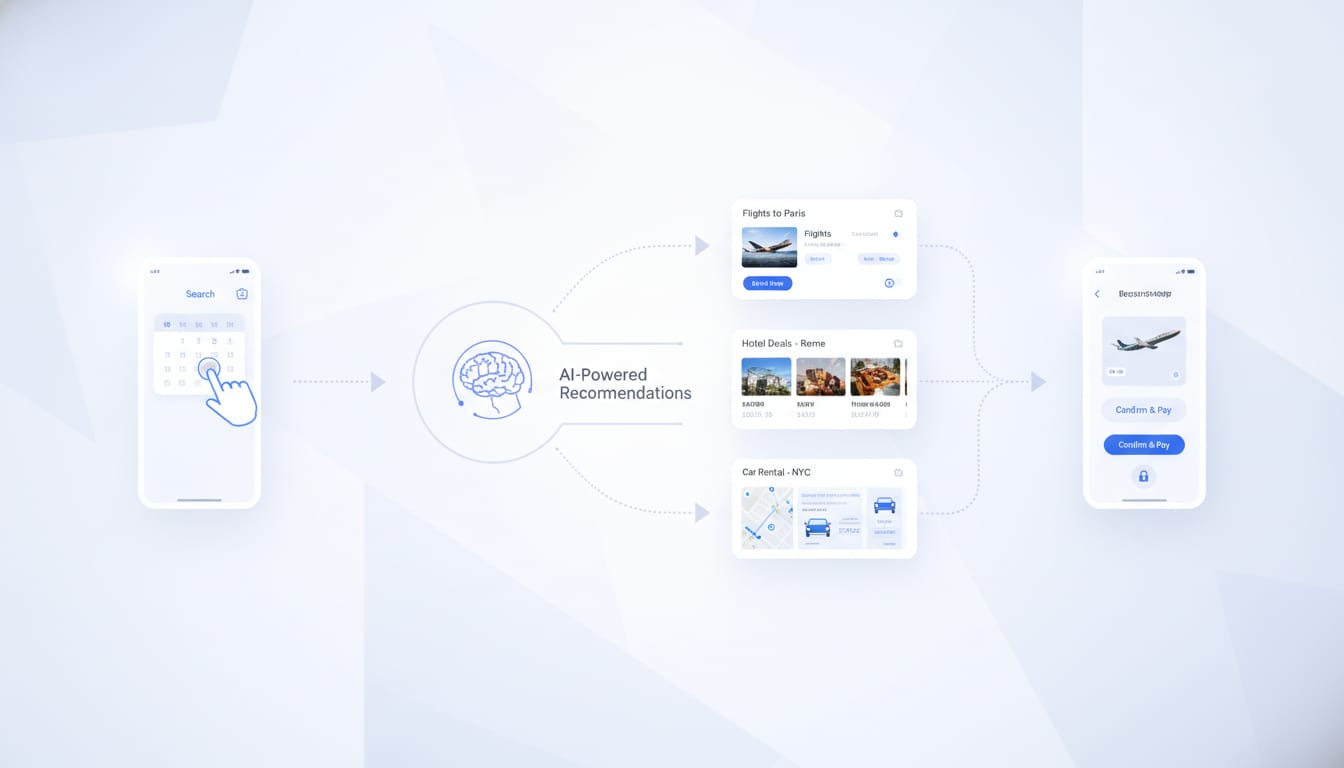
Beyond initial generation, AI can analyze user behavior data from existing applications or simulated environments to suggest optimizations for the booking app user flow. It can identify common drop-off points, predict user frustrations, and recommend design changes to improve conversion rates. This data-driven approach moves design from subjective intuition to objective enhancement, ensuring every design decision is backed by evidence. For instance, AI can highlight areas where users might struggle with date selection or payment processing, allowing designers to refine those specific interaction points for maximum efficiency. This capability is particularly valuable given that 72% of users prefer mobile apps over websites for making bookings due primarily to their convenience and efficiency (Source: Statista, 2023).
The ability of AI to rapidly generate and refine booking app user flow designs means that even those with limited design experience can achieve professional-grade results. This empowers founders to clearly visualize their app concepts and communicate their vision effectively to developers and investors. To explore various app design ideas and use cases, consider leveraging AI-powered platforms that can shape interfaces and user experiences, providing a clear visual direction from the outset. App design ideas and use cases can be quickly explored and refined with the right tools.
Core Principles of Effective Booking App User Flow Design
Crafting a superior booking app user flow design hinges on several foundational principles that guide users seamlessly through their journey. Adhering to these principles ensures that the application is not only functional but also delightful to use, fostering loyalty and driving conversions.
Simplicity and Minimalism: The Path to Conversion
A streamlined booking app user flow design minimizes unnecessary steps, actions, and decision points, thereby reducing cognitive load and preventing user frustration. Each screen should have a clear purpose, and every interaction should be intuitive. Eliminate redundant information, simplify forms, and use clear, concise language. For example, auto-filling known user details or offering guest checkout options can significantly reduce friction. The goal is to make the path to booking as direct and effortless as possible, as users are more likely to complete purchases or sign up for services if the process is straightforward and enjoyable.
Speed and Responsiveness: A Non-Negotiable
In the mobile-first era, speed is paramount. Users expect booking apps to load quickly and respond instantly to their inputs. Optimizing image sizes, leveraging efficient coding practices, and ensuring robust server performance are crucial. This is especially true for booking apps, where travel apps, for instance, see in-app conversion rates as high as 20%, significantly outperforming mobile web conversion rates of 6% (Source: Criteo, 2026). A fast, responsive interface reinforces reliability and keeps users engaged, preventing them from bouncing to competitors. Mobile-first deployments that prioritize rate rendering often show a 10% to 30% conversion lift for direct bookings on brand apps (Source: SiteMinder and Sabre Hospitality case studies, 2022-2023).
Intuitive Navigation and Clear Affordances
Users should instinctively know how to navigate your booking app. This requires consistent UI patterns, clear labels, and prominent calls-to-action. Visual cues, such as progress indicators, help users understand where they are in the booking process and what steps remain. Affordances, like a button clearly indicating 'Book Now' or 'Confirm Payment,' guide users without requiring them to think or guess. This clarity is vital for reducing errors and building confidence, especially when dealing with time-sensitive bookings or personal information.
Trust and Transparency: Building User Confidence
Users need to feel secure and informed throughout the booking process. This involves transparent pricing (no hidden fees), clear cancellation policies, and visible security indicators for payment transactions. For hotel bookings, users often prefer booking through reputable brands, even at a higher cost, and are strongly influenced by high-quality images and detailed descriptions (Source: Sara Morera, 2025). Providing timely feedback for every action (e.g., a confirmation message after a successful step) and offering clear error messages with actionable solutions further builds trust. A sense of control and predictability is essential, particularly for sensitive transactions.
Designing Your Booking App User Flow: A Step-by-Step Guide
Creating an effective booking app user flow design is a systematic process that benefits immensely from a structured approach, especially when integrating AI tools for efficiency.
Step 1: Define User Personas and Goals
Before designing any screens, understand who your users are. Develop detailed user personas that include their demographics, motivations, pain points, and technological proficiency. For a booking app, consider different user types: the last-minute traveler, the planner, the budget-conscious, or the luxury seeker. What are their primary goals when using your app? Is it to book a flight, reserve a table, or schedule an appointment? Clearly defined goals will guide the entire user flow design, ensuring that every step is purposeful and aligned with user needs.
Step 2: Map the Ideal User Journey
Visualize the entire path a user will take from entry to conversion. This involves outlining every potential screen, interaction, and decision point. Start with the most common scenarios and then branch out to less frequent ones, such as modifying a booking or handling an error. Use flowcharts or wireframes to map out these journeys, identifying potential friction points and opportunities for simplification. Remember that 63% of all online bookings are completed on mobile devices, making a mobile-first journey mapping essential (Source: SimplyBook.me, 2025). This foundational mapping is where AI can begin to assist, generating initial flow diagrams based on your defined personas and goals.
Step 3: Wireframe and Prototype with AI Assistance
Once the journey is mapped, translate it into visual designs. Start with low-fidelity wireframes to establish layout and hierarchy, then move to high-fidelity prototypes. This is where tools like Appthatdesigns shine. By describing your app idea, AI can help shape its interface, screens, and user experience, providing a clear visual direction. This process allows founders to quickly see their booking app user flow design come to life, iterating on visual elements and interaction patterns with unprecedented speed. The ability to rapidly generate and modify visual designs significantly accelerates the prototyping phase, allowing for more comprehensive exploration of design possibilities.
Step 4: Test, Iterate, and Optimize
No user flow is perfect on the first try. Conduct usability testing with real users to identify pain points, confusion, and areas of friction. Observe how users interact with your booking app user flow design, noting where they hesitate or abandon tasks. Gather feedback and use these insights to iterate and refine your designs. A/B testing different layouts or interaction patterns can provide quantitative data for optimization. Continuous iteration, informed by user feedback and analytical data, is crucial for achieving a truly seamless and high-converting booking experience. Businesses that actively monitor and optimize their booking conversion rates can see revenue increases of 15-30% (Source: myshyft.com, 2024).
Common Pitfalls in Booking App User Flow Design and How to Avoid Them
Even with the best intentions, certain mistakes can derail a booking app's user experience. Recognizing and actively avoiding these pitfalls is crucial for creating a robust and user-friendly application.
Overburdening the User with Information
One of the most common errors is presenting too much information at once, leading to cognitive overload. Users in a booking app are often looking to complete a specific task quickly. Cluttering screens with unnecessary details, too many options, or lengthy text can overwhelm them and lead to abandonment. Instead, present information progressively, only revealing what's essential at each stage of the booking app user flow design. Use visual hierarchy to highlight critical elements and allow users to delve deeper only if they choose to. This approach aligns with the principle of minimizing steps and reducing friction.
Neglecting Error Prevention and Recovery
Users inevitably make mistakes. A poorly designed system either doesn't prevent errors or offers unhelpful, generic error messages. Effective booking app user flow design anticipates potential errors, such as incorrect date selections or invalid inputs, and provides proactive validation. When an error does occur, the system should offer clear, concise, and actionable guidance on how to fix it. For example, if a chosen date range is unavailable, the app should suggest alternative dates rather than just displaying a generic error. This supportive feedback loop builds trust and prevents user frustration, which is a major cause of app abandonment.
Inconsistent Design Language
Inconsistency in design elements – such as button styles, typography, color schemes, or interaction patterns – creates confusion and makes an app feel unprofessional. When elements behave differently from one screen to the next, users have to re-learn how to interact, breaking their flow and eroding trust. A consistent design language across the entire booking app user flow design ensures predictability and a seamless experience. This includes consistent terminology, iconography, and visual feedback. Establishing a robust design system from the outset, often aided by AI tools that enforce consistency, is vital for maintaining a cohesive and intuitive user interface.
The Future of Booking App Design with AI
As AI technology continues to advance, its role in shaping booking app user flow design will become even more profound. The future points towards highly personalized, predictive, and proactive user experiences that anticipate needs before users even express them.
Personalization at Scale
AI will enable booking apps to offer hyper-personalized user flows. By analyzing historical booking data, preferences, and real-time context (like location or time of day), AI can dynamically adjust the app's interface and recommendations. Imagine a booking app that automatically suggests your preferred airline, hotel chain, or restaurant type, pre-fills common booking details, or even anticipates your next travel destination based on past behavior. This level of personalization, driven by AI, reduces decision fatigue and significantly streamlines the booking process, making each user's experience feel uniquely tailored and effortlessly efficient. This aligns with the fact that modern consumers value convenience, speed, and personalization in their app experiences (Source: Abler, 2025).
Predictive Analytics for Proactive Flows
Beyond personalization, AI's predictive capabilities will allow booking apps to offer proactive user flows. For instance, if a user frequently books last-minute weekend getaways, the app could proactively present curated deals for upcoming weekends, or even start a partial booking flow based on their known preferences. This shifts the paradigm from users searching for services to services intelligently finding and presenting themselves to users. AI can also predict potential issues in a user's journey, such as a flight delay or a conflict in scheduling, and proactively offer solutions within the app, further enhancing trust and user satisfaction. This proactive approach minimizes friction and maximizes convenience, setting a new standard for booking app user flow design.
The landscape of booking app user flow design is rapidly evolving, driven by user expectations for seamless, intuitive experiences and amplified by the transformative power of AI. For founders, creators, and design teams, embracing AI-driven tools like Appthatdesigns is no longer an option but a strategic imperative. By focusing on simplicity, speed, and a deep understanding of user needs, coupled with the intelligence of AI, it is possible to craft booking applications that not only meet but exceed user expectations, ultimately leading to higher engagement, conversion, and sustained success in a competitive digital world.
Frequently Asked Questions
Why is user flow design critical for booking apps?
User flow design is critical for booking apps because it directly impacts user satisfaction, retention, and conversion rates. A streamlined, intuitive flow minimizes friction, prevents user abandonment, and ensures users can complete their booking tasks efficiently, which is essential for revenue generation.
How can AI assist in designing booking app user flows?
AI can assist by rapidly generating initial wireframes and user flow diagrams from natural language prompts, accelerating prototyping and iteration. It can also analyze user behavior data to suggest optimizations, identify drop-off points, and recommend design changes, making the process more data-driven and efficient.
What are the key principles for an effective booking app user flow?
Key principles include simplicity and minimalism (minimizing steps), speed and responsiveness (fast loading and instant feedback), intuitive navigation (clear labels, consistent UI), and building trust and transparency (clear pricing, secure transactions, helpful error messages).
What common mistakes should be avoided in booking app user flow design?
Common mistakes to avoid include overburdening users with too much information, neglecting error prevention and providing unhelpful recovery messages, and using inconsistent design language that confuses users. Focusing on progressive information disclosure and clear feedback is crucial.
What is the future of booking app user flow design with AI?
The future involves hyper-personalized user flows, where AI dynamically adjusts interfaces and recommendations based on user history and real-time context. Predictive analytics will enable proactive flows, anticipating user needs and offering solutions before they are even explicitly sought, creating effortlessly efficient experiences.
Sources
Mobile Booking Conversion Rate: Benchmarks, Drop-Off Points and the Fixes That Work
72% of Your Potential Customers Prefer an App-Based Booking System - Abler
Retail and Travel Apps See 4x More Conversions than Mobile Web | Criteo
Optimizing Hotel Bookings: UX Insights for a Better User Experience | by Sara Morera
Online Booking Statistics 2026: 35+ Trends Every Business Should Know | SimplyBook.me
Crafting Seamless User Flows: A Guide to Enhancing UX - Claritee – Design Any App in Minutes with AI
69% of users have abandoned an app due to poor usability - We are testers